


Most Chicago pet owners who plan a weekend away think one daily visit from a sitter is plenty. It isn’t. Understanding how weekend pet sitting works is the difference between a pet who thrives while you’re gone and one who spends 12 anxious hours waiting for the next bathroom break. This guide walks you through visit schedules, sitter vetting, care planning, and everything else you need to feel genuinely confident leaving your fur baby in someone else’s hands for the weekend.
Table of Contents
- Understanding weekend pet sitting basics
- How to determine the right visit frequency for your pet
- Comparing weekend pet sitting visit schedules by pet type
- Ensuring safety and trustworthiness in weekend pet sitting
- Creating an effective care plan for weekend pet sitting
- Why many pet owners underestimate weekend pet sitting needs and how to avoid common pitfalls
- Find trustworthy weekend pet sitters in Chicago with Sparky Steps
- Frequently asked questions
Key Takeaways
| Point | Details |
|---|---|
| Visit frequency matters | Most dogs need at least three visits per day to stay comfortable and healthy during weekends away. |
| Vet your sitter thoroughly | Ask detailed questions about emergency plans, backup coverage, and certification to ensure safety. |
| Detailed care plans help | Providing clear instructions and a visible command center enables sitters to give personalized care smoothly. |
| Cats and small animals need regular care | Cats deserve visits at least every other day, and small pets often need daily check-ins tailored to their needs. |
| Professional services offer peace of mind | Choosing insured and bonded pet sitters with backup networks reduces risks and stress for pet owners. |
Understanding weekend pet sitting basics
To decide the right care for your pet, it’s important to understand these basics first.
Weekend pet sitting generally falls into two categories: drop-in visits and overnight stays. Drop-ins are scheduled blocks of time, usually 30 to 60 minutes, where a sitter comes to your home to feed, walk, play with, and check on your pet. Overnight stays mean the sitter sleeps at your home, providing more continuous supervision. Which option works best depends entirely on your pet’s temperament, age, and physical needs.
Here’s what most pet owners don’t fully account for when planning weekend pet care service:
- Dogs without doggie doors need a minimum of three drop-in visits per day covering morning, midday, and evening to handle bathroom breaks, meals, exercise, and companionship
- Dogs with doggie doors still need at least two daily visits for meals and health checks, even if they can go outside independently
- Cats are more self-sufficient but still require at least one visit every other day for feeding, litter box cleaning, and social interaction
- Small animals like rabbits, guinea pigs, and birds typically need daily check-ins tailored to their specific care routines, including habitat cleaning and fresh food and water
The mistake many owners make is treating weekend pet sitting like a one-size-fits-all service. Your neighbor’s laid-back senior cat has very different needs from your energetic two-year-old Labrador. Checking out weekend pet sitting schedules for different pet types can help you set realistic expectations before you ever book a sitter.
How to determine the right visit frequency for your pet
With these factors in mind, let’s look closer at how visit schedules vary by pet type.
The right visit frequency isn’t just about species. It’s about the individual animal in front of you. Several factors shape how often a sitter needs to show up, and getting this wrong is one of the most common weekend pet sitting mistakes owners make.
Key factors that influence visit frequency:
- Age: Puppies under six months may need a bathroom break every two to three hours. Senior dogs often have reduced bladder control and need similarly frequent visits.
- Health conditions: Diabetic pets, animals on timed medications, or those recovering from surgery need more frequent and specialized attention.
- Behavioral needs: Anxious dogs or pets prone to destructive behavior when alone benefit from more visits or an overnight sitter.
- Home setup: A doggie door gives your dog outdoor access between visits, but it doesn’t replace human interaction, feeding, or health monitoring.
Dogs typically need visits every 6 to 8 hours, with puppies, seniors, and medically complex pets requiring more frequent care. That means even the most independent adult dog should not go more than 8 hours without a sitter checking in.
Here’s a quick reference table to help you plan:
| Pet type | Minimum visits per day | Key care needs |
|---|---|---|
| Dog (no doggie door) | 3 | Potty, meals, exercise, companionship |
| Dog (with doggie door) | 2 | Meals, health check, interaction |
| Cat | Every other day | Feeding, litter, social time |
| Small animals | 1 daily | Food, water, habitat check |
| Medically complex pets | 3 or more | Medication, monitoring, comfort |
Pro Tip: If your dog is on heart medication or insulin, ask your sitter specifically whether they are comfortable administering timed doses. Not every sitter has this experience, and it’s better to confirm upfront than to discover the gap after you’ve already left town.
You can also browse dog visit frequency guidance to match your dog’s specific profile to the right schedule.
Comparing weekend pet sitting visit schedules by pet type
Now that you understand individual needs, here’s a direct schedule comparison to visualize differences.
One of the clearest ways to plan weekend pet care is to map out what a full weekend looks like for each pet type. The numbers may surprise you if you’ve been assuming one visit a day covers it.
Recommended weekend visit schedule by pet type:
- Dogs without doggie doors: Three visits per day, ideally spaced no more than 6 to 8 hours apart. Morning (7 to 8 a.m.), midday (12 to 1 p.m.), and evening (6 to 7 p.m.) is a reliable structure.
- Dogs with doggie doors: Two visits per day, morning and evening, focused on meals, exercise, and health checks.
- Cats: At minimum, one visit every other day. Cats who are social or elderly may benefit from daily visits.
- Small animals: Daily visits are standard. Rabbits, hamsters, and birds all need fresh food, water, and habitat monitoring every 24 hours.
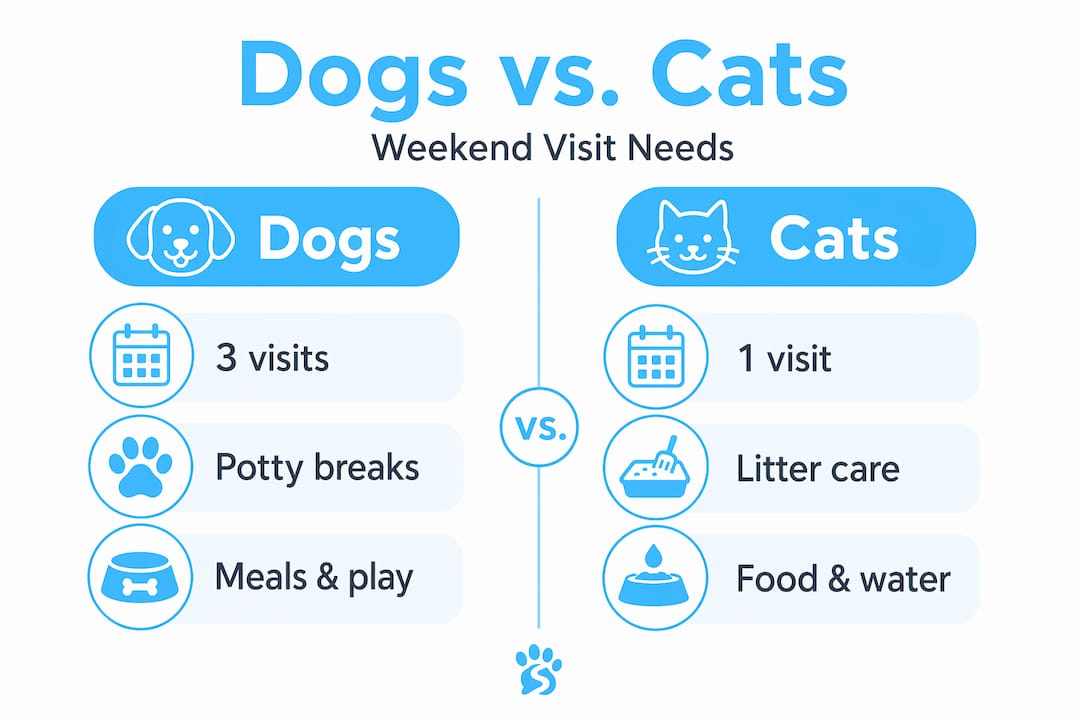
As a direct comparison, cats need at least one visit every other day, while dogs without doggie doors need three visits per day. That’s a significant difference in sitter time and cost, and it’s worth factoring into your weekend budget.
| Pet type | Saturday visits | Sunday visits | Total weekend visits |
|---|---|---|---|
| Dog (no doggie door) | 3 | 3 | 6 |
| Dog (with doggie door) | 2 | 2 | 4 |
| Cat | 1 | 0 | 1 to 2 |
| Small animals | 1 | 1 | 2 |
For more tailored guidance on feline care, explore cat care visits to understand what a quality cat sitting visit should include.
Ensuring safety and trustworthiness in weekend pet sitting
Beyond scheduling, selecting the right sitter is crucial to your pet’s safety and comfort.
Finding someone who loves animals is easy. Finding someone who is genuinely prepared to handle an emergency is a different matter. This is where how pet sitting services work really separates the dependable professionals from the casual helpers.
What to look for and ask when hiring a weekend pet sitter:
- Insurance and bonding: A professional sitter should carry commercial liability insurance. This protects you if your pet is injured or your home is damaged during a visit.
- Emergency medical protocol: Ask exactly what they will do if your pet collapses, stops eating, or shows signs of distress. A prepared sitter will have a clear answer.
- Backup coverage: Solo sitters who get sick or have a family emergency can leave your pet unattended. Always confirm there is a backup plan.
- Meet-and-greet sessions: Before the first paid visit, schedule a free meeting so you can observe how the sitter interacts with your pet. Watch your pet’s body language, not just the sitter’s words.
- Written agreements: A professional sitter will provide a service agreement outlining visit times, care instructions, cancellation policies, and emergency authorization.
“Always ask a sitter’s medical emergency protocol and confirm backup coverage, as solo sitters risk leaving pets unattended if ill.” — Professional pet sitter vetting checklist
Pro Tip: During the meet-and-greet, hand the sitter your pet’s leash or feeding bowl and step back. A confident, caring sitter will naturally engage with your pet. One who waits for your lead may not have the instincts you want watching your fur baby solo.
You can also review vetting pet sitters resources to build your own checklist before your first interview.
Creating an effective care plan for weekend pet sitting
A structured care plan makes the weekend pet sitting experience better for everyone involved.
Even the best sitter can only do their job well if they have the right information. A clear, organized care plan is one of the most underused tools in weekend pet sitting, and it’s completely free to put together.
How to build a care plan your sitter will actually use:
- Write a detailed care sheet. Include feeding amounts and times, medication schedules with dosage instructions, behavioral notes (does your dog lunge at bikes?), and any quirks your pet has around strangers or loud sounds.
- Leave emergency authorization in writing. Authorize a spending limit for emergency vet care in advance. This removes a critical delay if your sitter needs to act fast and can’t reach you.
- Create a visible command center. Insiders recommend a ‘command center’ sheet on the kitchen counter with emergency contacts, your vet’s address and phone number, your pet’s medical history summary, and your weekend itinerary.
- Number your emergency steps. Don’t write a paragraph. Write: Step 1, call us. Step 2, call the vet. Step 3, here is the carrier location. Numbered steps reduce panic and increase accuracy.
- Include calming techniques. If your cat hides under the bed when anxious, tell the sitter. If your dog settles with a specific toy, leave it out. These small details make a real difference in your pet’s comfort.
Pro Tip: Take a photo of your completed care sheet and text it to your sitter the day before you leave. That way they have a digital backup even if the paper gets moved or misplaced.
You can find templates and additional guidance on preparing pet care instructions to make this process even easier.
Why many pet owners underestimate weekend pet sitting needs and how to avoid common pitfalls
Here’s something we’ve seen consistently since Sparky Steps started serving Chicago pet owners in 2016: the biggest gaps in weekend pet care aren’t caused by bad sitters. They’re caused by owners who underestimated what their pet actually needs for 48 hours without them.
The most common assumption we hear is that a single daily visit is sufficient for a healthy adult dog. But leaving a dog alone for 12 hours is not recommended. Dogs need bathroom breaks every 6 to 8 hours to avoid both physical discomfort and emotional stress. A dog who has been holding it for 10 hours isn’t just uncomfortable. They’re anxious, and that anxiety can turn into destructive behavior or health issues.
The second underestimated factor is backup planning. Many pet owners hire a solo sitter and never ask about coverage if that sitter gets sick. This is a real risk, especially over a holiday weekend. A professional service with a team structure eliminates this gap entirely.
The “command center” approach is also far less common than it should be. Most owners leave a few sticky notes and hope for the best. A proper quick-reference sheet, as described above, has saved more than a few pets from delayed emergency care because the sitter had everything they needed without making a panicked phone call.
Finally, don’t skip the trial run. Book your sitter for a short outing before your first full weekend away. A two-hour trial visit tells you more about how a sitter operates than any interview question. Watch whether they send you an update. Check whether your pet seems relaxed when you return. That data is worth more than any credential.
Avoiding common pet sitting mistakes is mostly about preparation, not luck. The owners who feel genuinely at ease on their weekends away are the ones who planned carefully and hired professionals who matched that standard.
Find trustworthy weekend pet sitters in Chicago with Sparky Steps
You now have a clear picture of how weekend pet sitting works, what your pet actually needs, and what to look for in a sitter. The next step is finding someone in Chicago who checks every box.

Sparky Steps has been matching Chicago pet owners with insured, background-checked, and compassionate pet sitters since 2016. Our sitters follow personalized care plans, provide real-time updates with photos and GPS tracking through our app, and always have backup coverage in place. Whether your fur baby is a high-energy pup who needs three daily visits or a senior cat who just needs company and a clean litter box, we build a schedule around their needs, not a generic template. And if you want to show your love for your pet beyond the weekend, check out our dog dad apparel or dog mom apparel while you’re here.
Frequently asked questions
How many times should a pet sitter visit my dog on weekends if there is no doggie door?
A dog without a doggie door should receive at least three daily visits covering bathroom breaks, feeding, exercise, and companionship to maintain their health and reduce stress over the weekend.
What should I ask a pet sitter about emergency medical care?
Ask about their specific emergency protocol, including how they stabilize a pet, who they contact first, and which emergency vet they use. Also confirm backup coverage in case the sitter becomes unavailable.
Are overnight stays necessary for weekend pet sitting?
Overnight stays are most beneficial for pets with separation anxiety or those needing constant supervision, but many healthy pets do well with scheduled drop-in visits spaced appropriately throughout the day.
How can I prepare my home and instructions to help my weekend pet sitter?
Create a detailed care sheet with feeding schedules, medications, emergency contacts, and pet routines, and set up a clearly visible ‘command center’ sheet on your kitchen counter for quick sitter reference.
What makes a pet sitter trustworthy for weekend care?
A trustworthy sitter carries commercial liability insurance, has a clear emergency protocol, provides written service agreements, offers meet-and-greets, and has backup sitters available in case of illness or unexpected emergencies.
Written by the Sparky Steps Team

