


A primary pet caregiver is the person who consistently shows up for a pet's daily needs: the feeding, the walks, the vet appointments, the 2 a.m. "something sounds wrong" check-ins. The role is defined by what you actually do, not whose name is on the registration paperwork. And for most pets, that distinction makes all the difference in the world.
This guide covers what primary caregiving really means, why consistency is one of the most powerful things you can offer a pet, what to look for when choosing someone to share that role, and how to document care in a way that protects everyone involved.
Caregiving is a behavior, not a title
The person who feeds your dog every morning, books the vet appointments, and knows exactly how your cat likes to be brushed is the primary caregiver. Full stop. A primary pet caregiver is defined by consistent daily performance of essential duties. That person may or may not be the legal owner on paper, and in practice, the distinction rarely matters until it suddenly matters a lot.
Courts in pet custody disputes increasingly prioritize caregiving evidence over legal ownership titles. Veterinary records, dated care logs, and microchip registration that reflects who actually performs daily care carry far more weight than a receipt from an adoption agency. If you are the person doing the work, document it as you go. Consistent, timestamped records are the clearest proof of primary caregiver status if that question ever comes up.
But for most pet parents, the legal angle is beside the point. What actually matters is this: your pet knows who their person is. They learn your schedule, your footsteps, your energy. That relationship is built through daily, consistent care. It cannot be faked, and it cannot be transferred quickly.
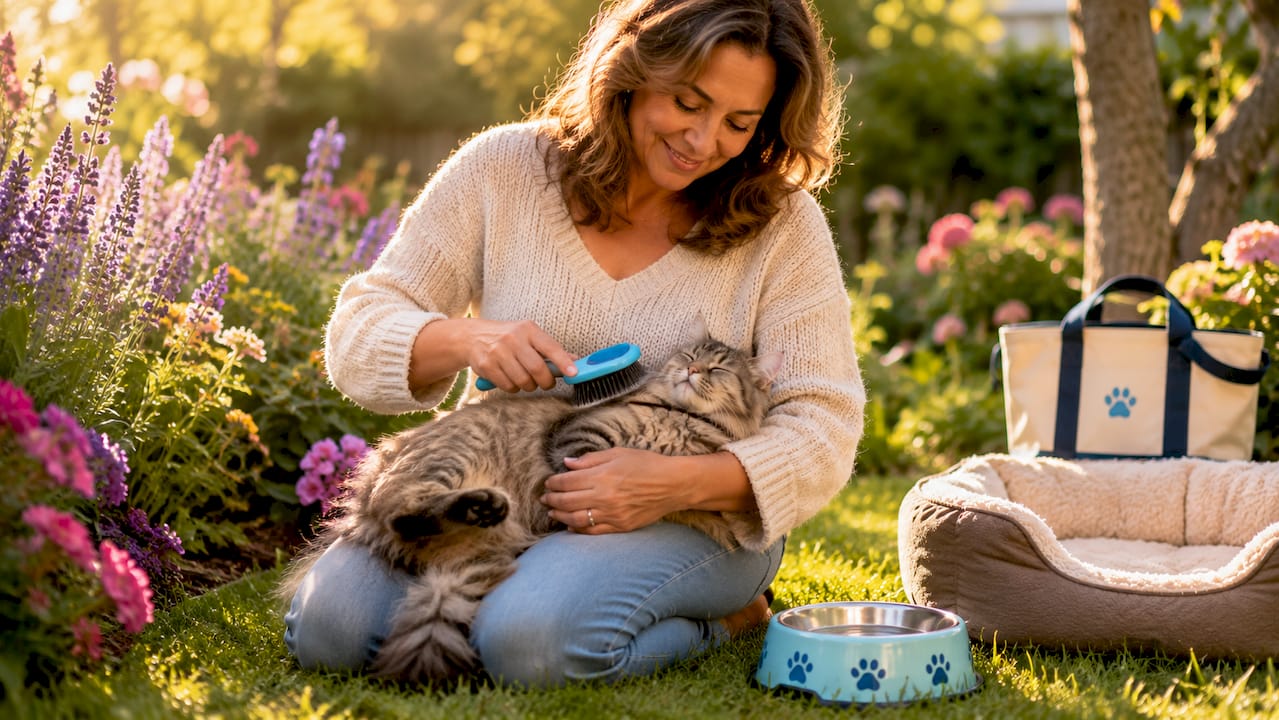
What primary caregiving actually looks like day to day
Good caregiving is a lot of small things done consistently. None of it is glamorous. All of it matters.
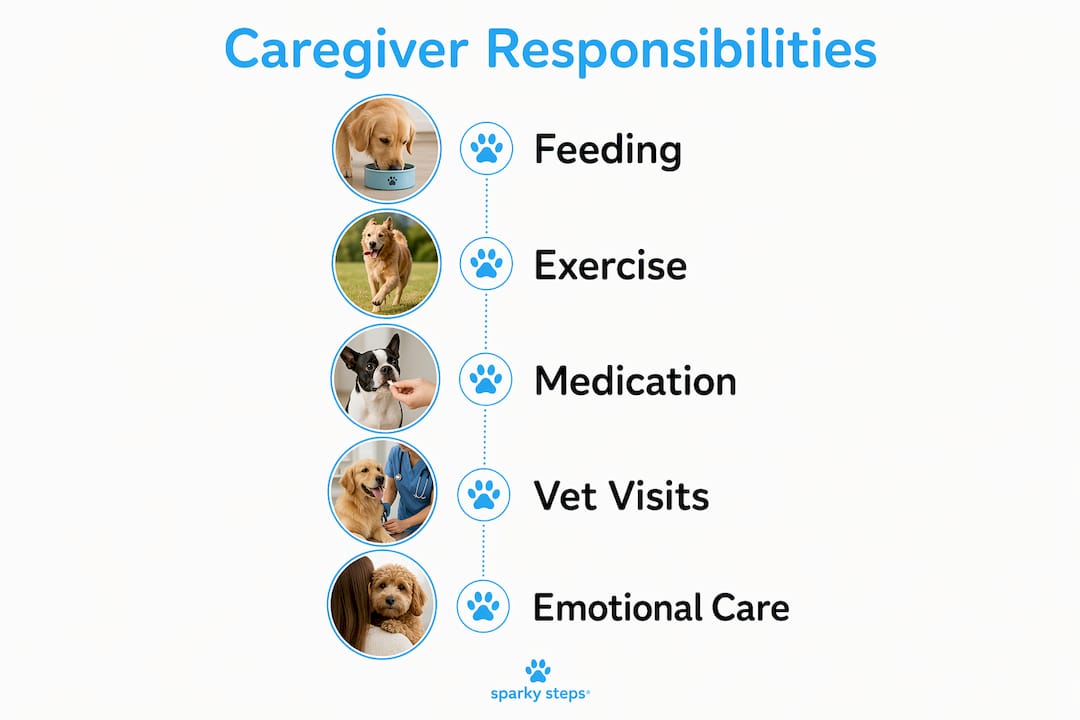
- Feeding and fresh water. Consistent portions at consistent times. Free feeding makes it hard to notice when appetite changes, and appetite changes are often the first sign something is off.
- Exercise and bathroom routines. Walks, outdoor time, and litter box maintenance on a predictable schedule. For dogs, this means real physical and mental stimulation, not just a quick trip to the curb and back.
- Grooming and hygiene. Brushing, nail trims, ear cleaning, and the occasional bath. Neglected grooming leads to matting, infections, and a dog who looks at you with profound disappointment every time the brush comes out.
- Medication management. Pets with chronic conditions, allergies, or post-surgical needs require precise, timely medication. Missed doses are not a minor inconvenience: they're a health risk.
- Vet appointments and health tracking. Scheduling checkups, staying current on vaccinations, and following up on concerns. Being listed as the primary contact in your pet's vet file is a direct reflection of who's actually managing their care.
- Behavioral attention and companionship. Completing the task list is only half the job. A caregiver who feeds and walks a dog but never engages with them is missing the relationship entirely. Pets need interaction, play, and the feeling that someone genuinely notices them.
- Emergency preparedness. Knowing your vet's after-hours number, having a plan for weather emergencies, and keeping a pet profile current with medications and behavioral notes. When things go sideways, preparation is everything.
Pro tip: Create a one-page pet profile with your pet's feeding schedule, medications, vet contact, behavioral quirks, and emergency contacts. Hand it to any caregiver before their first visit. It takes 20 minutes and saves enormous confusion. Your dog will thank you, probably with zoomies.
Why consistency is one of the most powerful things you can give a pet
Pets are creatures of habit in a way that goes deeper than preference. Routine is genuinely calming to their nervous system. A dog who eats, walks, and sleeps on a predictable schedule is a calmer, more behaviorally stable dog. A cat who knows when playtime happens is less likely to redecorate your couch at 3 a.m.
The benefits of consistent caregiving show up clearly over time:
- Earlier detection of health changes. A caregiver who knows a pet's normal baseline notices when something is off. Subtle changes in appetite, energy, or behavior often signal health issues before they become serious. You only catch them if you're paying attention every day.
- Reduced anxiety and behavioral stability. Pets with consistent caregivers show fewer signs of separation anxiety, destructive behavior, and stress-related aggression. Familiarity is calming in a way that nothing else can replicate.
- Stronger attachment and trust. The relationship between a pet and their primary caregiver is built through repetition: the same voice, the same routines, the same person at the door. That trust takes time to build and is genuinely hard to replace.
- Better support for special needs. Pets with anxiety, chronic illness, or medication schedules need someone who knows their history. A rotating cast of strangers cannot provide that, no matter how well-intentioned they are.
This is exactly why Sparky Steps assigns the same trusted walkers to every client. Your dog should not have to guess who is showing up at the door. The consistency is the service.
How to choose a caregiver you can actually trust
Choosing a caregiver is one of the most important decisions a pet parent makes, and it deserves more thought than a quick app search and a profile scan. The wrong fit creates stress for your pet and anxiety for you. The right one gives you genuine peace of mind.
Here's what to actually look for:
- The same person every visit. Consistency is the foundation. A service that sends whoever's available is not the same as a service that sends someone your pet already knows. Ask directly: will I have the same walkers?
- Real-time updates after every visit. GPS tracking, photos, and visit notes are not a luxury feature: they're the standard for any professional caregiver. You handed someone a key to your home and trust with your pet. Knowing what happened during that visit is the bare minimum.
- Verified credentials. Licensed, bonded, and insured. Each of those three words means something specific. Ask for proof, not just assurance. A caregiver who carries their own pet care insurance protects you if something goes wrong.
- Genuine curiosity about your pet. A good caregiver asks questions before the first visit. What does your dog do when they're nervous? Are there dogs in the neighborhood they react to? What's the feeding routine exactly? A caregiver who shows up and figures it out as they go is not the right fit.
- A clear emergency protocol. Ask how they handle medical emergencies. Do they have your vet's contact on file? Is there a procedure? "We'll figure it out" is not an answer.
Pro tip: After a meet-and-greet, ask the caregiver to describe your pet's routine back to you. If they can do it accurately, they were paying attention. If they can't, keep looking.
Here is a quick comparison to help you evaluate your options:
| Factor | What to look for | Red flag |
|---|---|---|
| Consistency | Same caregiver every visit | New person each time |
| Updates | GPS, photos, and notes after every visit | No communication during visits |
| Credentials | Licensed, bonded, and insured | No insurance or vague answers |
| Knowledge of your pet | Remembers routines and quirks | Treats every pet the same |
| Emergency plan | Clear protocol and vet contact on file | “We’ll figure it out” |
How to document your pet's care (and why it matters more than you think)
Documentation is not just for legal disputes. It's how good caregiving gets communicated, continued, and protected. A caregiver who logs visits, tracks medications, and keeps vet contacts current is a caregiver who takes the role seriously. And if you ever need to hand off care, temporarily or permanently, good records make that transition far smoother for your pet.
The basics worth keeping:
- A running care log. Feeding, medications, walks, behavioral observations. Dated entries with timestamps matter more than you'd think if questions ever arise. A notes app works fine. Consistency is what counts.
- Veterinary records in your name. Being listed as the primary contact and the responsible party for payment in your vet's files reflects the reality of who's managing care.
- A current pet profile. One document that any trusted caregiver can pick up and follow: feeding schedule, medications with doses and timing, behavioral notes, vet contact, emergency protocol. Update it when anything changes.
- Receipts for food, medication, and vet visits. Not for tax purposes, just as a practical record of ongoing care. They tell a clear story over time.
Good records are not just legal protection. They're proof of attentiveness. And they're what lets someone else care for your pet the way you would, even when you can't be there.
Key takeaways
- Primary caregiving is defined by consistent daily action, not legal ownership or paperwork.
- Routine is genuinely calming to pets: the same schedules, the same people, the same environment reduce anxiety and support better behavioral health.
- When evaluating a caregiver, the three non-negotiables are consistency, real-time communication, and verified credentials.
- Good documentation serves everyone: it reflects attentive care, protects you if questions arise, and makes transitions easier on your pet.
- The right care team knows your pet by name, routine, and quirk, not just by address.
What a decade of caregiving relationships has taught me
By Michael Jaurigue, co-founder of Sparky Steps
"Ten years in, the pattern is pretty clear. Pet parents who struggle treat it like a transaction... they focus on price and convenience, skip the meet-and-greet, and then wonder why their dog is anxious every time someone shows up.
The ones who get it right treat it like a partnership. They share everything: the feeding quirks, the fear of thunderstorms, the fact that Max will only drink from the left side of his bowl. A caregiver who has that information can actually show up for your pet, not just physically, but in a way that feels familiar.
The best caregivers are also curious. They ask questions before the first visit and notice things during it. "Your dog seemed a little low-energy today." That kind of attentiveness comes from people who genuinely care, and you can't fake it.
My advice... choose a caregiver the way you'd choose anyone you're going to trust with someone you love. Meet them. Watch how they interact with your pet. If something feels off, trust that feeling. Your pet already will."
— Michael Jaurigue
The Sparky Steps approach to consistent care
Sparky Steps has served 250+ Chicago pet parents since 2016, and the foundation of everything we do is consistency. Every client works with the same trusted walkers at every visit: no strangers, no surprises, no "whoever's available today." Our care team covers neighborhoods across Chicago's North Side, from Albany Park to Roscoe Village, and every visit includes real-time updates via DoTimely: GPS tracking, photos, and visit notes sent directly to you.
Your pet deserves someone who knows them. We'd love to be that team. 🐾
FAQ
What is a primary pet caregiver?
A primary pet caregiver is the person who consistently performs daily care duties for a pet, including feeding, exercise, grooming, and medical management. The role is defined by active, ongoing caregiving behavior, not legal ownership.
How is a primary pet caregiver different from a legal owner?
Legal ownership refers to who holds title or registration for a pet. A primary caregiver is whoever performs the daily hands-on care consistently over time. In custody disputes, courts increasingly prioritize caregiving evidence over ownership records.
What records prove primary caregiver status?
Veterinary records listing you as the primary contact carry the most weight. Dated care logs, microchip registration in the caregiver's name, and receipts for food and medical expenses also help establish a clear record of ongoing care.
Why does consistency matter in a pet caregiver?
Pets thrive on routine and familiar faces. Consistent caregivers reduce stress, support behavioral stability, and notice health changes early because they know what "normal" looks like for that specific pet.
What should I look for when hiring a professional pet caregiver?
The three non-negotiables: the same person at every visit, real-time updates with GPS and photos, and verified credentials (licensed, bonded, and insured). Beyond that, look for someone who asks good questions before the first visit and genuinely engages with your pet rather than just completing a checklist.
Written by the Sparky Steps Team.
Authorship Note
The content above aligns with the values of Sparky Steps LLC. While our trusty artificial intelligence helped organize the article, whip up some fun images, and translate ideas into clear, practical language, the final masterpiece is a delightful collaboration between passionate human writers who adore animals and a sprinkle of artificial intelligence magic. Remember, if you think writing is easy, try typing with paws!


