


When your pet is in crisis, the difference between a good outcome and a tragedy often comes down to two things: recognizing the emergency fast, and knowing exactly where to go. This guide is built to give you both before you ever need them. It covers how to tell a true emergency from something that can wait, which Chicago clinics are open around the clock, what to bring, what happens when you arrive, and what it all costs. Read it now, while things are calm. Think of it as your steady co-pilot for one of the scariest moments a pet parent can face.
What qualifies as a pet emergency in Chicago?
Recognizing a true emergency is the most critical skill a pet parent can have. The American Veterinary Medical Association (AVMA) identifies respiratory distress, uncontrolled hemorrhage, poison ingestion, cluster seizures lasting longer than 5 minutes, and sudden paralysis as clear emergencies requiring immediate veterinary intervention. That 5-minute seizure benchmark is a clinical standard. Cross it, and you go straight to an emergency clinic, no debate.
Not every alarming moment is a true emergency, though. The Merck Veterinary Manual stresses distinguishing acute emergencies from urgent but less critical conditions. A dog limping after a walk is urgent. A dog that cannot stand and is crying in pain is an emergency. Knowing the difference helps you make the right call without panic.
Here are the signs that mean go now, not tomorrow:
- Difficulty breathing, choking, or blue-tinged gums
- Uncontrolled bleeding that does not stop within 5 minutes
- Suspected ingestion of a toxic substance (chocolate, xylitol, rat poison, medications)
- Seizures lasting more than 5 minutes or multiple seizures in a short period
- Sudden collapse, inability to stand, or loss of consciousness
- Severe vomiting or diarrhea with blood
- Obvious broken bones or severe trauma after an accident
- Extreme lethargy or unresponsiveness
- Straining to urinate with no output, especially in cats (this is a life-threatening blockage)
- Eye injuries or sudden vision loss
And here are signs that are urgent but can often wait a few hours for a same-day vet visit:
- Mild limping with no obvious wound
- Single episode of vomiting or diarrhea with no blood
- Small cuts or scrapes that are not bleeding heavily
- Mild ear scratching without swelling
If you are ever unsure whether your pet's condition is an emergency, call an emergency clinic right away and describe the symptoms clearly. The staff will tell you whether to come in immediately or monitor at home. That call costs nothing and could save your pet's life.
Where to go: Chicago 24/7 emergency vet clinics
When every minute counts, you do not want to be searching for a phone number. Save these before you need them. The hospitals below are open 24 hours a day, including nights, weekends, and holidays, and accept walk-ins. Hours, locations, and phone numbers can change, so call to confirm availability before you head out, and in a true emergency, always go to the nearest open ER.
MedVet Chicago (Avondale)
3305 N. California Ave, Chicago, IL 60618
Phone: (773) 281-7110
Open 24/7, 365 days a year. Full emergency and critical care, plus avian and exotic pet care.
Veterinary Emergency Group (VEG), Lincoln Park
755 W. North Ave, Chicago, IL 60610
Phone: (312) 757-5444
Open 24/7, walk-ins welcome. Treats dogs, cats, reptiles, birds, and other exotics. VEG operates additional Chicago and suburban locations, so find the one nearest you before you need it.
If your pet ate something toxic, call a poison hotline immediately:
- ASPCA Animal Poison Control Center: (888) 426-4435 (24/7; a consultation fee may apply)
- Pet Poison Helpline: (855) 764-7661 (24/7; a per-incident fee applies)
These hotlines can tell you whether what your pet ingested is dangerous and exactly what to do in the critical minutes before you reach a clinic. If you can, bring the packaging or a photo of the label with you.
Beyond emergencies, our Chicago Pet Resources Hub keeps a running directory of local rescue groups, low-cost clinics, poison control, and city pet services worth bookmarking before you ever need them.
How do Chicago emergency vet clinics operate?
Chicago emergency vet clinics run 24 hours a day, 7 days a week, including holidays. Most operate as walk-in facilities, meaning you do not need an appointment. You show up, and the care team takes it from there.

The first thing that happens when you arrive is triage. Emergency clinics use a triage system similar to human trauma care that sorts incoming patients into three categories: critical, urgent, and non-urgent. A dog in respiratory distress goes straight to the back. A cat with a minor wound waits. This system exists to allocate resources where they matter most, and it works. Do not take it personally if a pet that arrived after yours gets seen first. Their situation is simply more critical at that moment.
Once your pet is triaged, the diagnostic phase begins. Here is a general sequence of what to expect:
- Initial assessment: A veterinary technician takes vitals, notes symptoms, and asks about your pet's history.
- Veterinarian examination: The vet performs a physical exam and asks follow-up questions about what you observed at home.
- Diagnostic testing: Depending on symptoms, this may include blood panels, urinalysis, X-rays, or ultrasound imaging.
- Treatment plan: The vet presents findings, explains options, and outlines costs before proceeding.
- Treatment and monitoring: Your pet receives care, which may include IV fluids, medication, surgery, or overnight monitoring.
- Discharge or transfer: Stable pets go home with instructions. Critical cases may transfer to a specialty hospital for continued care.
Here is a quick overview of common diagnostic tools used at Chicago emergency vet clinics:
| Diagnostic tool | What it detects | Typical use case |
|---|---|---|
| Blood panel | Organ function, infection, anemia | Lethargy, vomiting, collapse |
| X-ray | Fractures, foreign objects, fluid | Trauma, swallowed objects |
| Ultrasound | Internal organ abnormalities | Abdominal pain, suspected masses |
| Urinalysis | Kidney function, blockages | Straining to urinate |
| ECG | Heart rhythm irregularities | Collapse, irregular heartbeat |
Owner communication is a priority at reputable emergency clinics. You should receive updates throughout the process. If you are not getting them, ask. You are your pet's spokesperson because your pet cannot describe their symptoms or medical history. That role matters enormously in an emergency setting.
How to prepare before going to an emergency vet in Chicago
Preparation before you arrive at an emergency clinic directly affects how fast your pet gets the right care. Bringing recent medical records, medications, and a symptom timeline is one of the first things clinic staff request at check-in. Having these ready removes delays and helps the vet make faster, more accurate decisions.
Here is what to gather before you leave home:
- Medical records: Vaccination history, previous diagnoses, and any known allergies
- Current medications: Bring the actual bottles so the vet can check dosages and ingredients
- Symptom timeline: Write down when symptoms started, what changed, and any possible triggers
- Leash or carrier: Keep your pet secure and calm during transport
- Payment method: Credit card, debit card, or pet insurance information (more on costs below)
- Toxic substance samples: If your pet ingested something harmful, bring the packaging or take a photo of the label
That last point is worth emphasizing. Bringing physical samples or photos of suspected toxic substances helps veterinary staff start the correct treatment immediately, without waiting for test results. A photo of the rat poison box your dog got into is worth more than a verbal description.
One more habit worth building: calling ahead before you arrive triggers faster triage and gives you critical transport safety advice. If your pet has a suspected spinal injury, for example, staff can tell you exactly how to move them without causing more damage. That one phone call can change the outcome.
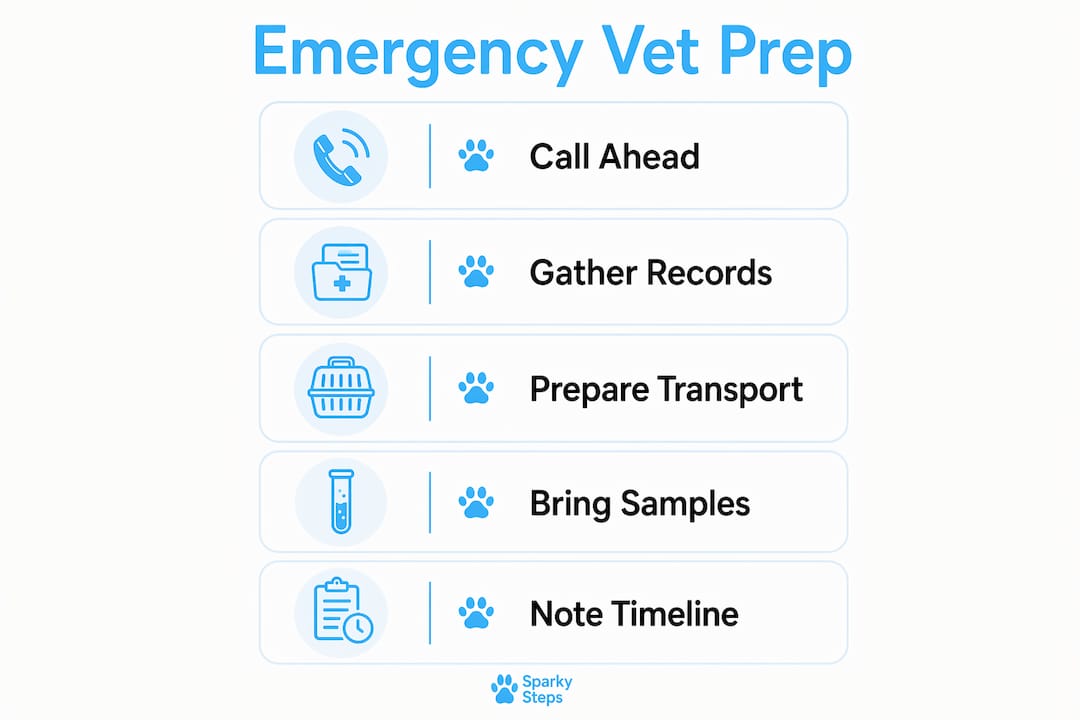
You can also review the emergency pet sitting guide from Sparky Steps for a practical checklist that helps Chicago pet parents prepare for unexpected situations, including what to have ready before a crisis hits.
What does emergency vet care cost in Chicago?
Emergency vet care in Chicago is expensive, and knowing that ahead of time removes one layer of shock during an already stressful moment. Emergency vet bills in Chicago can reach $16,046.32 for dogs and $10,918.62 for cats in the most serious cases. Those are the high end of the range, but they are real numbers, not outliers.
Most emergency visits fall well below those peaks, but costs add up quickly once diagnostics, IV fluids, medications, and overnight monitoring enter the picture. A single emergency visit with blood work and treatment can run anywhere from a few hundred dollars to several thousand, depending on the condition.
Pet insurance is the most effective financial buffer available. Policies vary widely in what they cover, so read the fine print before you need it. Many plans cover emergency care, surgery, and hospitalization, but most require the policy to be active before the emergency occurs. Pre-existing conditions are typically excluded.
Reputable emergency clinics in Chicago practice financial transparency through itemized cost estimates before any procedure begins. This is now standard practice at quality facilities. You have the right to review costs and ask questions before authorizing treatment. No ethical clinic will proceed without your informed consent. If cost is a barrier, ask the clinic about payment plans or third-party financing such as CareCredit, which many emergency hospitals accept.
Here is a general cost comparison for common emergency scenarios:
| Emergency type | Estimated cost range | Notes |
|---|---|---|
| Initial exam and blood work | $200 to $500 | Standard for most emergency visits |
| X-rays or ultrasound | $150 to $400 | Per imaging session |
| IV fluids and medication | $300 to $800 | Depends on duration and drugs used |
| Foreign body removal (surgery) | $1,500 to $5,000 | Varies by complexity |
| Overnight hospitalization | $500 to $2,000 per night | Includes monitoring and nursing care |
For more context on caring for your dog's health costs, including how to prepare financially for veterinary emergencies, Lakewood Ranch Doodles offers practical guidance worth reviewing.
Key takeaways
| Point | Details |
|---|---|
| Recognize true emergencies | Seizures over 5 minutes, respiratory distress, uncontrolled bleeding, and sudden paralysis require immediate care. |
| Save a clinic number now | Program a 24/7 emergency vet and a poison hotline into your phone before a crisis, not during one. |
| Call ahead before arriving | Calling the clinic prepares the team and gives you safe transport instructions for your specific situation. |
| Bring records and samples | Medical records, medication bottles, and photos of toxic substances speed up diagnosis and treatment. |
| Plan for real costs | Emergency bills can reach five figures in serious cases; pet insurance and upfront estimates help manage the financial side. |
What I have learned after 10 years of Chicago pet care
By Michael Jaurigue, co-founder of Sparky Steps
The hardest part of a pet emergency is not the vet visit itself. It is the 10 minutes before you leave the house, when panic sets in and your brain goes blank. I have seen it happen with pet parents we have worked with for years, people who are calm and organized in every other area of their lives. A sick or injured pet short-circuits all of that.
The single biggest mistake I see is waiting too long. Pet parents tell themselves their dog is "probably fine" because they do not want to overreact or spend money unnecessarily. I understand that instinct completely. But the conditions that look minor at 9 PM can become life-threatening by 2 AM. When in doubt, call the clinic. That is not overreacting. That is being a good advocate for an animal who cannot speak for themselves.
The second mistake is arriving unprepared. No records, no medication list, no idea what the pet ate or when symptoms started. The vet team is skilled, but they are working blind without that information. A simple note on your phone with your pet's medications, allergies, and vet history takes five minutes to create and can save critical time in an emergency.
One thing I genuinely believe: knowing your local Chicago emergency vet resources before you need them is one of the most loving things you can do for your pet. Save the nearest 24-hour clinic and a poison hotline in your phone right now. Review the Chicago animal shelter and emergency resource guide so you already know your options. That preparation is quiet, unglamorous, and absolutely worth it.
Michael Jaurigue
Sparky Steps and your pet's everyday well-being
A pet emergency is easier to navigate when your pet is already in good hands day to day. Sparky Steps has served 250+ Chicago pet parents across the North Side since 2016, and our care team knows your pet's routines, quirks, and personality. That familiarity matters in a crisis. When your pet is with our walkers and something seems off, we notice, because we know what "normal" looks like for your specific animal.
Our pet sitting services in Chicago cover dogs, cats, and small animals, with real-time updates via DoTimely after every visit. GPS tracking, photos, and visit notes go straight to you. If anything looks concerning, you hear about it immediately. For pet parents who want their dog active and healthy between vet visits, our dog running services keep energy levels balanced and stress low. Healthy, well-exercised pets tend to have fewer health crises. That is not a coincidence.
FAQ
What counts as a pet emergency?
A pet emergency is any condition that poses an immediate risk to your pet's life or long-term health, including respiratory distress, uncontrolled bleeding, seizures over 5 minutes, suspected poisoning, and sudden paralysis. When in doubt, call a 24-hour emergency clinic for guidance.
Where is the nearest 24-hour emergency vet in Chicago?
Two established 24/7 emergency hospitals on the North Side are MedVet Chicago in Avondale (3305 N. California Ave, 773-281-7110) and Veterinary Emergency Group in Lincoln Park (755 W. North Ave, 312-757-5444). Both accept walk-ins. Confirm hours before you go, and in a true emergency, head to the nearest open ER.
What should I do if my pet ate something poisonous?
Call a poison hotline immediately: the ASPCA Animal Poison Control Center at 888-426-4435 or the Pet Poison Helpline at 855-764-7661, both available 24/7. Bring the packaging or a photo of the label to the vet so the team can start the right treatment quickly.
How much does an emergency vet visit cost in Chicago?
Costs vary widely depending on the condition and treatment required. Serious cases have reached $16,046.32 for dogs and $10,918.62 for cats in Chicago. Most visits cost several hundred to a few thousand dollars, and clinics provide itemized estimates before treatment begins.
What should I bring to an emergency vet visit?
Bring your pet's medical records, current medications, a written symptom timeline, and any samples or photos of substances your pet may have ingested. These items help the vet team start the right treatment faster.
Does pet insurance cover emergency vet care in Chicago?
Most pet insurance plans cover emergency care, surgery, and hospitalization, but coverage varies by policy and pre-existing conditions are typically excluded. Review your policy details before an emergency occurs so you know exactly what is covered.


