


When you hand your keys to a pet sitter and head to the airport, the last thing on your mind is legal paperwork. But what pet sitting business structure means for your fur baby’s care is more significant than most Chicago pet owners realize. The way a pet sitter organizes their business directly shapes their accountability, insurance coverage, pricing, and professional standards. Understanding these structures helps you ask the right questions, spot reliable sitters, and feel genuinely confident your pet is in safe, trustworthy hands while you’re away.
Table of Contents
- Understanding common pet sitting business structures
- How business structure shapes pet sitting services and pricing
- Professional standards linked to business structure in pet sitting
- Choosing the right pet sitting business structure: what Chicago pet owners should consider
- Why business structure really matters for your pet’s care and your peace of mind
- Discover trusted pet sitting with Sparky Steps in Chicago
- Frequently asked questions
Key Takeaways
| Point | Details |
|---|---|
| Business structures matter | The type of business structure your pet sitter uses affects legal protection and professionalism you can expect. |
| Sole proprietorship vs LLC | Sole proprietors have no liability separation; LLCs offer asset protection and a more formal business image. |
| Professional standards build trust | Contracts, insurance, and formal policies distinguish reliable sitters from casual providers. |
| Pricing reflects services | Prices vary based on added home care tasks and species-specific needs, not just time spent. |
| Choose based on care quality | Look beyond paperwork to how well the sitter matches your pet’s routine and safety needs. |
Understanding common pet sitting business structures
Now that we’ve introduced why business structure matters, let’s clarify the main types you’ll encounter when searching for dependable Chicago pet sitting services.
Most pet-sitting businesses operate as either sole proprietorships or Limited Liability Companies (LLCs), each with specific pros and cons. Knowing the difference helps you evaluate any sitter’s level of professionalism before you ever sign up.
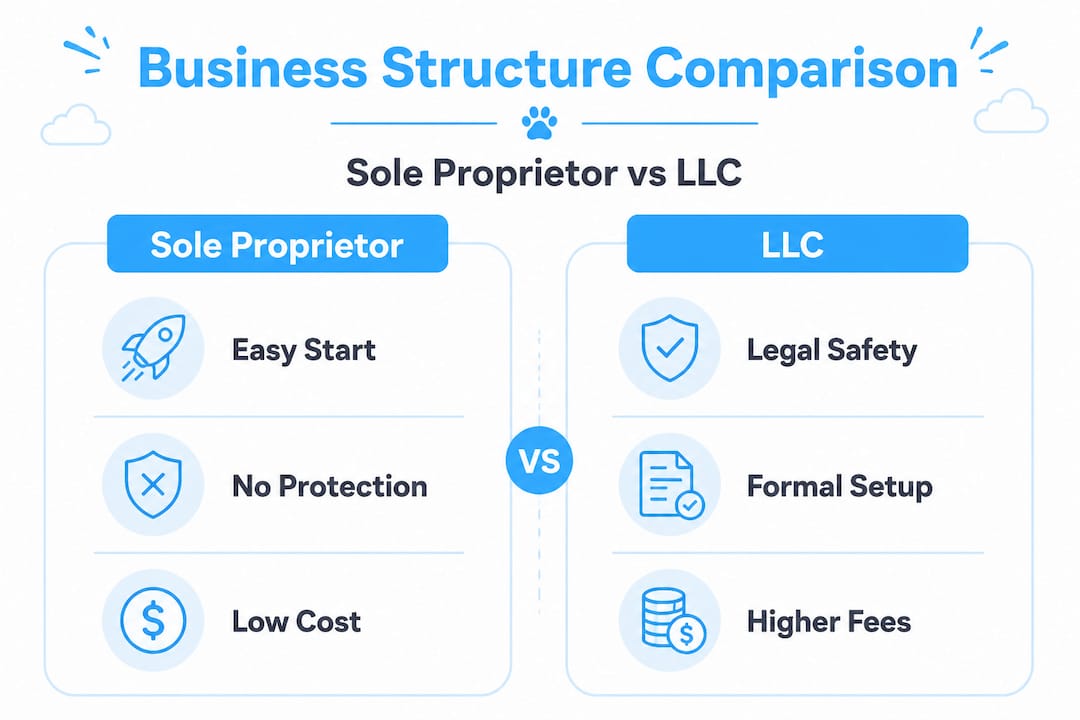
Sole proprietorship is the most basic form. It starts automatically the moment someone begins offering pet sitting services. There is no formal filing with the state, no registration fees, and no separation between the owner’s personal finances and their business. That last part matters a lot. If a sitter operating as a sole proprietor is sued because your dog got injured in their care, their personal savings, car, and home are all fair game in court.
LLC (Limited Liability Company) is a more formal structure that requires filing paperwork with the state and paying registration fees. The main benefit is that it legally separates the sitter’s personal assets from the business. If something goes wrong, you’re more likely dealing with business-level liability rather than someone’s personal life savings. That said, LLCs don’t offer complete immunity. If a sitter directly causes harm through their own actions or negligence, personal liability can still apply.
Here’s a quick comparison to put it in perspective:
| Feature | Sole proprietorship | LLC |
|---|---|---|
| Setup cost | None | State filing fees required |
| Personal asset protection | None | Yes, with some limits |
| Professional appearance | Lower | Higher |
| Insurance compatibility | Possible | Easier to obtain |
| Client trust signal | Moderate | Strong |
| Best suited for | Part-time or casual sitters | Full-time professionals |
Regardless of structure, contracts and liability insurance remain essential for both sitters and clients. A sitter without a written service agreement or proof of insurance is a risk no matter how friendly they seem. These documents protect your pet, your home, and you.
Key things to look for in any pet sitting business setup:
- Proof of liability insurance (general or pet-specific policies)
- A written service contract outlining scope of care, emergency protocols, and cancellations
- Clear communication practices and update procedures
- Background-checked caregivers
- Transparent pricing with no hidden fees
How business structure shapes pet sitting services and pricing
With the basics of structure defined, let’s explore how it directly affects the services and pricing you can expect from different types of providers.
Pet sitting is a time-for-money business, capping solo sitter income and limiting how many clients they can serve. A solo sitter working alone can only book so many visits per day. That ceiling affects not just their earnings but also their availability to you, especially during holidays or last-minute requests.

Solo sitters who add house-sitting services can justify charging 15 to 30% more than standard pet-sitting-only rates. Staying overnight in your home, managing mail, and maintaining your pet’s full routine is a more involved service. It creates more value, and sitters with formal business structures tend to offer these options more consistently.
Solo sitters’ income caps at $60,000 to $100,000 annually; scaling beyond that requires building multi-sitter teams focused on coordination rather than hands-on care. For you as a pet owner, that shift from a solo caregiver to a network model changes the experience significantly. You may work with multiple sitters depending on availability, which can affect routine and trust.
Factors that typically influence pet sitting pricing:
- Pet type and count. Cats generally cost less to sit than large dogs. Multiple pets often come with a discounted rate per additional animal.
- Service length. A 30-minute drop-in is priced very differently than a full overnight stay.
- Added home care tasks. Watering plants, taking in mail, and managing medication for your pet all factor into the rate.
- Location and travel. In Chicago, sitters may adjust rates based on neighborhood or travel distance.
- Trust and experience level. Sitters with certifications, longer track records, and formal business registration often charge more because their professionalism reflects in the quality of care.
For growing pet sitting businesses, the shift from solo to network model introduces new systems for client management, caregiver coordination, and quality control.
Why Chicago pet owners often prefer personalized, routine-based services over mass boarding facilities:
- Pets stay in a familiar environment, which reduces anxiety and stress
- One-on-one attention means your pet’s specific needs are actually met
- Consistent caregivers build real trust with your animal over time
- Home-based care avoids exposure to unfamiliar animals and potential illness
- Real-time updates, photos, and GPS tracking provide visible reassurance
The pet sitting and house sitting differences matter when you’re deciding what level of care your pet actually needs, not just what fits the budget.
Professional standards linked to business structure in pet sitting
Understanding the professional benchmarks helps you evaluate local sitters’ credibility and service quality based on their business setup.
Professional pet sitters use contracts, insurance, and industry best practices, while hobbyists often lack these essential protections. The gap between a professional and a casual neighbor who “loves dogs” can be enormous when things go sideways.
A formally structured pet sitting business signals commitment. It means the sitter has invested time and money into creating a reliable operation. That investment almost always produces better outcomes for your pet.
“The line between a professional pet sitter and a casual one isn’t talent or love for animals. It’s the systems, protections, and accountability that a formal business structure makes possible.”
Benefits that professional pet sitting in Chicago businesses bring to the table:
- Reliability. Professionals have backup plans, not just good intentions. If they’re sick, a vetted colleague steps in.
- Pet safety. Formal training in pet first aid, animal behavior, and emergency response reduces risk.
- Clear communication. Structured businesses communicate proactively, not just when something goes wrong.
- Defined policies. Cancellation terms, emergency procedures, and care instructions are documented in writing.
- Legal accountability. Insurance and contracts mean both parties are protected in case of an accident or dispute.
Pro Tip: Before booking any pet sitter, ask directly for their proof of insurance and a sample service contract. Any professional worth trusting will provide both without hesitation. If they can’t, or seem confused by the request, treat that as a red flag.

Choosing the right pet sitting business structure: what Chicago pet owners should consider
Now that you know what the business structures mean, here’s how to apply that knowledge to find the best sitter for your pet in Chicago.
You don’t need to become a business attorney to make a smart decision. You just need a short, practical checklist that reflects your pet’s real needs.
Steps to evaluate a pet sitter’s business structure and professionalism:
- Search for their business registration. Ask if they operate as an LLC or registered business. A quick Google search or asking them directly will tell you a lot.
- Request proof of insurance. Look for general liability coverage and, ideally, a policy specific to pet care services.
- Ask for a service contract. Review it for clear terms around care scope, emergencies, cancellations, and communication.
- Evaluate their pricing model. Are rates transparent and service-specific? Vague or inconsistent pricing can signal a less organized operation.
- Observe their communication. Do they respond quickly? Do they ask detailed questions about your pet’s routine and health history? Attentiveness before the first visit reflects how they’ll behave during it.
- Look for personalized care practices. Ask how they handle a pet that needs medication, has anxiety, or follows a strict feeding schedule. The answer reveals a lot about their training and commitment.
Pro Tip: Look for sitters offering transparent, species-specific or service-specific pricing. A sitter who charges the same flat rate for a senior dog with health needs and a young healthy cat probably isn’t tailoring their service to each animal’s actual requirements.
When choosing pet sitting services in Chicago, prioritize sitters whose business model signals long-term commitment rather than a temporary side gig. Your pet deserves someone who’s in this for the right reasons and has built a structure to back that up.

Why business structure really matters for your pet’s care and your peace of mind
Here’s a perspective worth sitting with. Most pet owners focus on personality when choosing a sitter. Does my dog like them? Are they warm and enthusiastic? Those things matter. But they’re not enough on their own.
The business structure a sitter chooses reveals something deeper: how seriously they take their responsibility to you and your pet. A sitter who has filed for LLC status, carries insurance, and uses written contracts isn’t just doing paperwork. They’re communicating that your pet’s safety and your peace of mind are worth protecting at a formal level.
Operators who survive and scale are those who transition from doing daily care to focusing on growth and client experience. The sitters and pet care businesses that last are the ones who start thinking like business owners, not just animal lovers. That mindset shift produces better training investments, more consistent caregiving, and a higher standard of client communication.
Informal sitters may adore animals and still leave you in a difficult position if something goes wrong. No contract means no clarity. No insurance means no coverage. No formal structure means no accountability beyond their word. For your fur baby’s sake, that’s not enough.
When we built trusted Chicago pet care from the ground up, the formal structure wasn’t just a legal formality. It was the foundation that allowed us to invest in training, hire background-checked caregivers, and create consistent experiences for every pet and owner we serve. Structure isn’t bureaucracy. It’s care made reliable.
Discover trusted pet sitting with Sparky Steps in Chicago
Now that you understand what business structure means for your pet’s care, consider what a professionally organized service actually looks like in practice. Sparky Steps has been serving Chicago pet owners since 2016 as a fully insured, community-driven pet sitting and dog walking company. Every caregiver is background-checked, every visit includes real-time updates via app with photos and GPS tracking, and every service is built around your pet’s individual routine. Whether you need drop-in visits, overnight care, or consistent dog walking, we bring both heart and professional accountability to every visit.
Written by the Sparky Steps Team
Frequently asked questions
What is a sole proprietorship in pet sitting?
A sole proprietorship is automatically created when operations begin, with no formal filing required, and it does not separate personal from business liability. It’s the most common starting point for new sitters but offers the least legal protection for both the sitter and clients.
How does forming an LLC protect me as a pet sitter?
LLCs protect personal assets from business liabilities but do not fully prevent personal liability for injuries caused by the sitter’s direct actions. As a pet owner, working with an LLC-registered sitter generally means there’s more accountability built into the business.
Why do professional pet sitters use contracts and insurance?
Professional pet sitters use contracts, insurance, and follow best practices to ensure consistent, reliable care for every client. Contracts prevent misunderstandings about service terms, and insurance covers accidents that could otherwise create serious financial and legal problems.
How does business structure affect pet sitting pricing?
Adding house-sitting services allows pet sitters to charge 15 to 30% more than pet-sitting-only rates. Generally, more formal business structures support broader service offerings, specialized care options, and higher pricing that reflects genuine professionalism.
What should Chicago pet owners look for when choosing a pet sitter?
Owners should prioritize sitters who are registered businesses with valid insurance, use written contracts, offer transparent pricing, and demonstrate personalized care practices tailored to each pet’s routine and health needs. These markers together signal a sitter who treats their work as a true professional responsibility, not a casual favor.


